
Transport

Technical Assistance to Support Moldova in the restructuring process of State Enterprise “Railways of Moldova”
Transport

Technical Assistance to Support Moldova in the Implementation of the EU Rail Transport Acquis
Transport

Technical Assistance for supporting Ukraine in aligning with the EU Maritime Transport Acquis
Transport
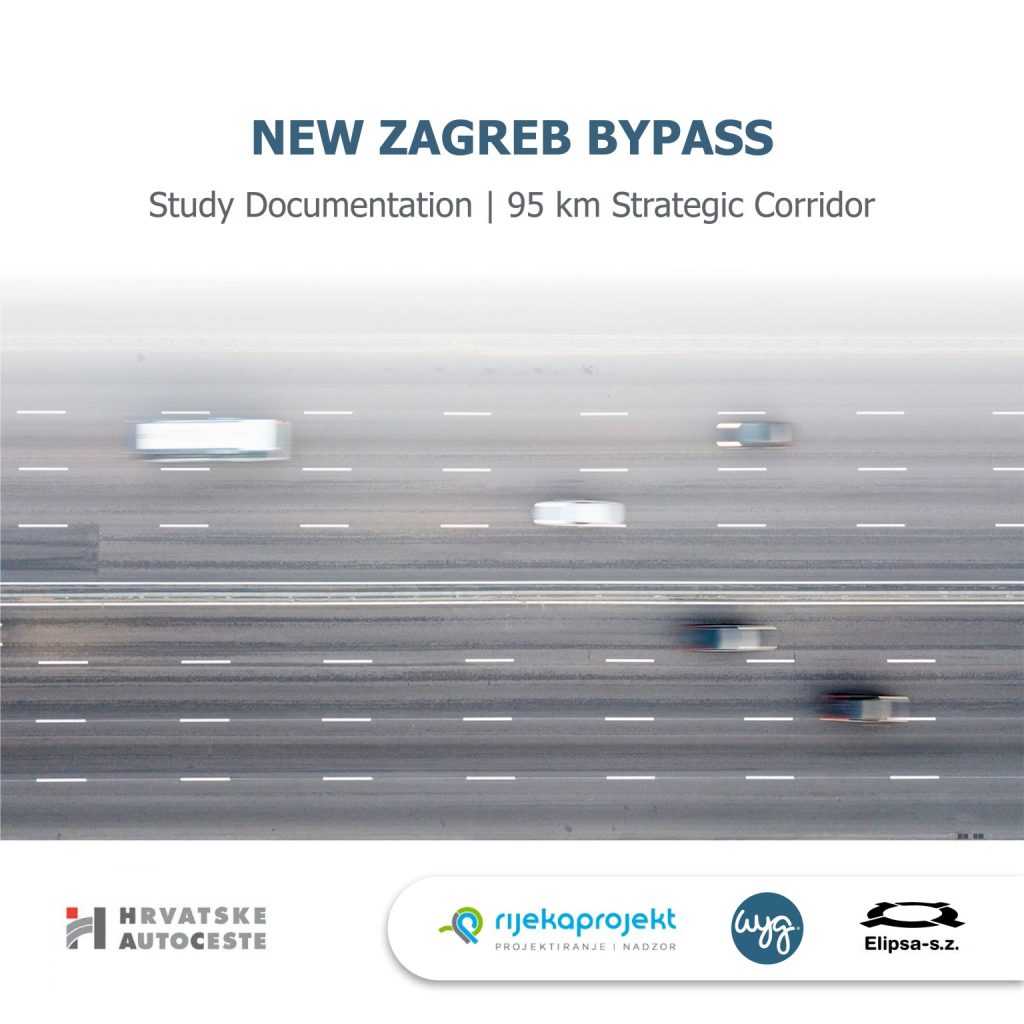
New Zagreb Bypass Study Documentation
Transport
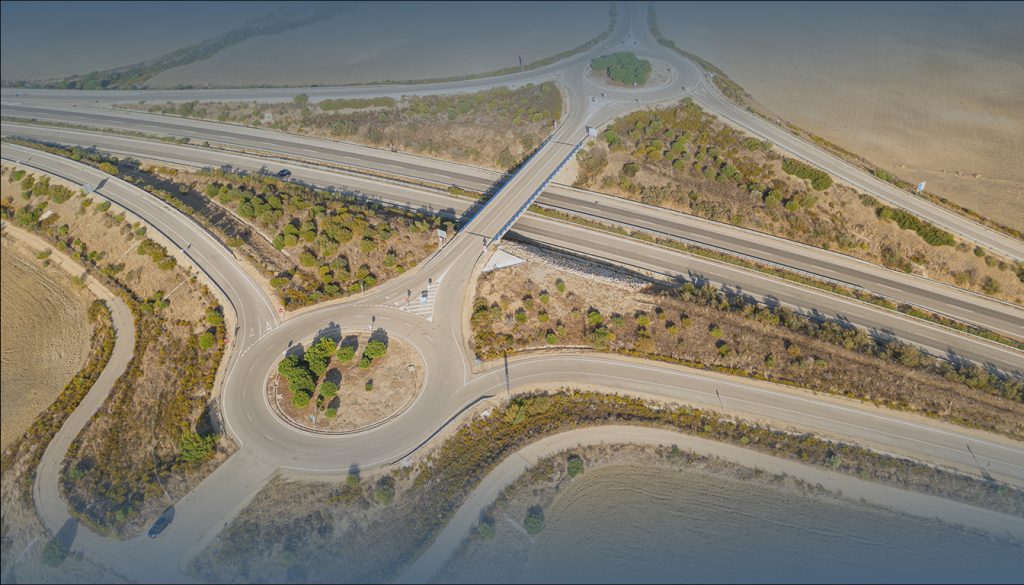
Northern Corridor Infrastructure Masterplan Update, Analytical Comparative Cost Study, and Projects Investment Prospectus for Two Priority Projects
OTHER PROJECTS:
The consortium - Rijekaprojekt, WYG Consulting, and ELIPSA-S.Z. - has been selected by Hrvatske ceste d.o.o. (Croatian Roads) to prepare the Feasibility Study for the State Road Bjelovar – Đurđevac. This 12-month assignment aims to assess and identify the optimal solution for improving the road connection between Bjelovar and Đurđevac, strengthening the transport network in continental Croatia and enhancing connectivity between the Podravina corridor and the wider Bjelovar region.
Key activities include:
▪️ development of a traffic model
▪️ review and testing of existing conceptual variants (and development of new variants if needed)
▪️ cost-benefit analysis (CBA) for each option
▪️ multi-criteria analysis (MCA) to confirm the preferred solution
▪️ sensitivity and risk analysis
▪️ preparation of the project implementation plan
The project will improve regional mobility and infrastructure planning in Croatia.
Following the granting of EU candidate status to Georgia, Moldova, and Ukraine, the three countries committed to aligning their transport policies and infrastructure development with the EU framework. Despite significant progress, further adjustments of legal and institutional frameworks and stronger administrative capacities are required to close harmonisation gaps and ensure effective integration with the EU transport market. Against this background, the Transport Community Permanent Secretariat, with support from the European Commission, launched this Framework Contract to provide targeted technical assistance and capacity building to address the most pressing regulatory and institutional needs in the transport sectors of the three observing participants
The project provides technical assistance and capacity building to accelerate the integration of Georgia, Moldova, and Ukraine into the European transport market. It aims to support the three observing participants of the Transport Community in aligning their transport sectors with the EU acquis, particularly under Chapters 14 (Transport Policy) and 21 (Trans-European Networks).
The overall objective is to accelerate the integration of Georgia, Moldova, and Ukraine into the European transport market by supporting the alignment of their transport sectors with the EU acquis and the priorities of the Transport Community Treaty. Specific objectives include:
- Providing tailored technical assistance for the transposition and implementation of EU transport legislation.
- Supporting institutional and policy reforms to strengthen governance and regulatory frameworks.
- Enhancing the administrative and technical capacities of line ministries, agencies, and other stakeholders.
- Facilitating the preparation of studies, designs, and project documentation in key transport areas, including road, rail, road safety, inland waterways, maritime transport, and TEN-T development.
The Framework Contract is expected to deliver:
- Improved compliance of the three countries with EU transport legislation, standards, and practices.
- Strengthened institutional capacity of ministries and agencies to design, manage, and implement reforms.
- Production of high-quality deliverables (e.g. legal acts, action plans, feasibility studies, technical specifications, tender dossiers) tailored to stakeholder needs.
- Successful organisation of training and capacity-building events, enabling transfer of knowledge and sustainable impact.
Overall progress in creating safer, more efficient, and more sustainable transport systems, fostering closer ties with the EU and preparing for potential future membership in the Transport Community
October 2023 marked a significant milestone for Croatia's strategic infrastructure. The state road DC403, stretching from the Škurinje junction to the Port of Rijeka, has officially opened to traffic! This project is more than just a road; it's a vital artery connecting Croatia's future Zagreb Deep Sea container terminal with the national highway network. The impact of this endeavour cannot be understated. Not only does it enhance the competitiveness of the Port of Rijeka, but it also paves the way for the flourishing development of Rijeka and the Primorje Gorski Kotar County.
The project value is approximately 67 million euros, while 85% of it was co-financed by European funds. The project's highlights include the construction of the impressive Podmurvice tunnel, extending 1263 meters beneath urban settlements, the Mlaka viaduct spanning 144 meters, the Piopi viaduct at 316 meters in length, two innovative roundabouts, and the intersection of Zvonimirova Street.
WYG Consulting provided invaluable project management and technical assistance services. Our experts tackled technical, legal, and economic challenges with precision and determination, ensuring the project's success and its far-reaching benefits to the community. We're thrilled to have played a part in this incredible journey and look forward to witnessing the positive impact it will have on Croatia's infrastructure, economy, and future growth.
Check out the newly opened road DC403: https://www.youtube.com/watch?v=Nj2yr9-ArwY
In order to alleviate worsening traffic load issues in the city of Karlovac, the Rijeka-Zagreb Motorway authority designed this project to create a feasibility study on relocating a part of state road D6 to improve traffic flow. Consortium has developed three conceptual solutions for the proposed road connection, including impact research on the local community and the environment, financial analysis, cost-benefit analysis, and risk assessment. The analysis identified the optimal course for a 4.5km segment of road and proved the project’s feasibility, and social benefit.
This European Commission project was designed to improve Albania's EU integration process by aligning transport sector policy with EU acquis and build the administrative, regulatory, and technical capacity of the Ministry of Public Works and Transport (MPWT) and other government bodies in the transport sector. WYGC’s supported WYG International team in implementation of project which drafted new legislation, by-laws, and regulations, resulting in improvements to the legislative and regulatory framework for the transport sector. Project also ran a capacity building training programme for MPWT staff on EU legal standards and practices, provided training and support to MPWT staff to implement a dangerous goods transport law, and consolidated a single transport accident investigation body at the ministry level. Consortium team also provided assistance for the creation of a national railway authority in accordance with EU standards and helped the Maritime Administration bring maritime transport policies and practices up to date.
Croatia’s national road construction and maintenance agency issued a tender for a feasibility study for a road transport corridor between the towns of Žuta Lokva and Križišće on Croatia’s northern Adriatic coast. A team of five key experts designed five conceptual solutions, then used multi-criteria analysis and cost-benefit analysis to select the best possible design. The chosen solution was a 56.5km two-lane road that will significantly improve road safety, reduce travel time, remove road traffic from inhabited areas, and provide better local, national, and international accessibility, while simultaneously improving environmental impact over existing roads and reducing emissions.
Zagreb is one of five members of the CIVITAS ELAN project, which aims to help developing cities implement sustainable, clean mobility solutions for passenger and freight traffic. As part of this project, the city of Zagreb is planning to build an intermodal transport terminal at the Sava Bridge. WYG’s task was to prepare Terms of References for a feasibility study with cost-benefit analysis for this project. After a detailed review of EU co-financed intermodal terminals, the team of six key experts provided the city with a document including instructions on how to prepare the feasibility study, including conceptual design, traffic models, and environmental impact assessment.
Croatian Roads Ltd., Croatia’s national road construction and maintenance agency, contracted this study to connect the towns of Bjelovar and Virovitica to the Croatian motorway network and the Trans-European Transport Network (TEN-T). WYG’s team of five key experts delivered five conceptual solutions for the road’s design, then used multi-criteria analysis and cost-benefit analysis to select the optimal solution. The resulting design will improve transport between three Croatian counties and strengthen Croatia’s road connections with Hungary, while simultaneously increasing road safety, reducing travel times and costs, enhancing environmental protection, and relocating road traffic out of congested urban areas.
The Berlin Process is an intergovernmental initiative to strengthen multilateral ties between the Western Balkans and EU member states and improve cooperation regarding infrastructure and economic development. The Process laid the groundwork for the Vienna and Paris Summits and the resulting Connectivity Agenda, which is currently one of the highest policy priorities for the region's countries. As sustainable economic growth is considered key to stability and integration in the Western Balkan countries (WB6), the Berlin Process focuses on strengthening economic governance by supporting the development of high priority transport and energy projects. The Vienna and Paris Agendas include large, complex infrastructure projects in transport and energy for which the EU has set aside €1 billion from 2014-2020.
Technical Assistance to Connectivity in the Western Balkans (ConnecTA) is a straightforward mechanism designed to reach a common vision shared by four sets of stakeholders: the EU, IFIs, beneficiaries, SEETO, and the Energy Committee (EnC). The project’s main objectives are to bring high-priority energy and transport infrastructure projects to maturity for investment co-financing and to support short- and medium-term regional reform measures in the transport sector. WYG’s is a partner for a consortium with four partners (Mott MacDonald, COWI, CESTRA, TRENECON) to provide technical support in implementing priority connectivity infrastructure projects and supporting connectivity through regional transport and energy policy.
The comprehensive package of services provided by WYG for this project, valued at over €17,000,000, includes pre-feasibility and feasibility studies, financial affordability analysis, detailed technical designs, budget and financing plans, tender documentation and support, training courses, monitoring and evaluation of engineering works, social impact assessment, and more.